ServicesSiding Installation
Siding Installation in Brevard
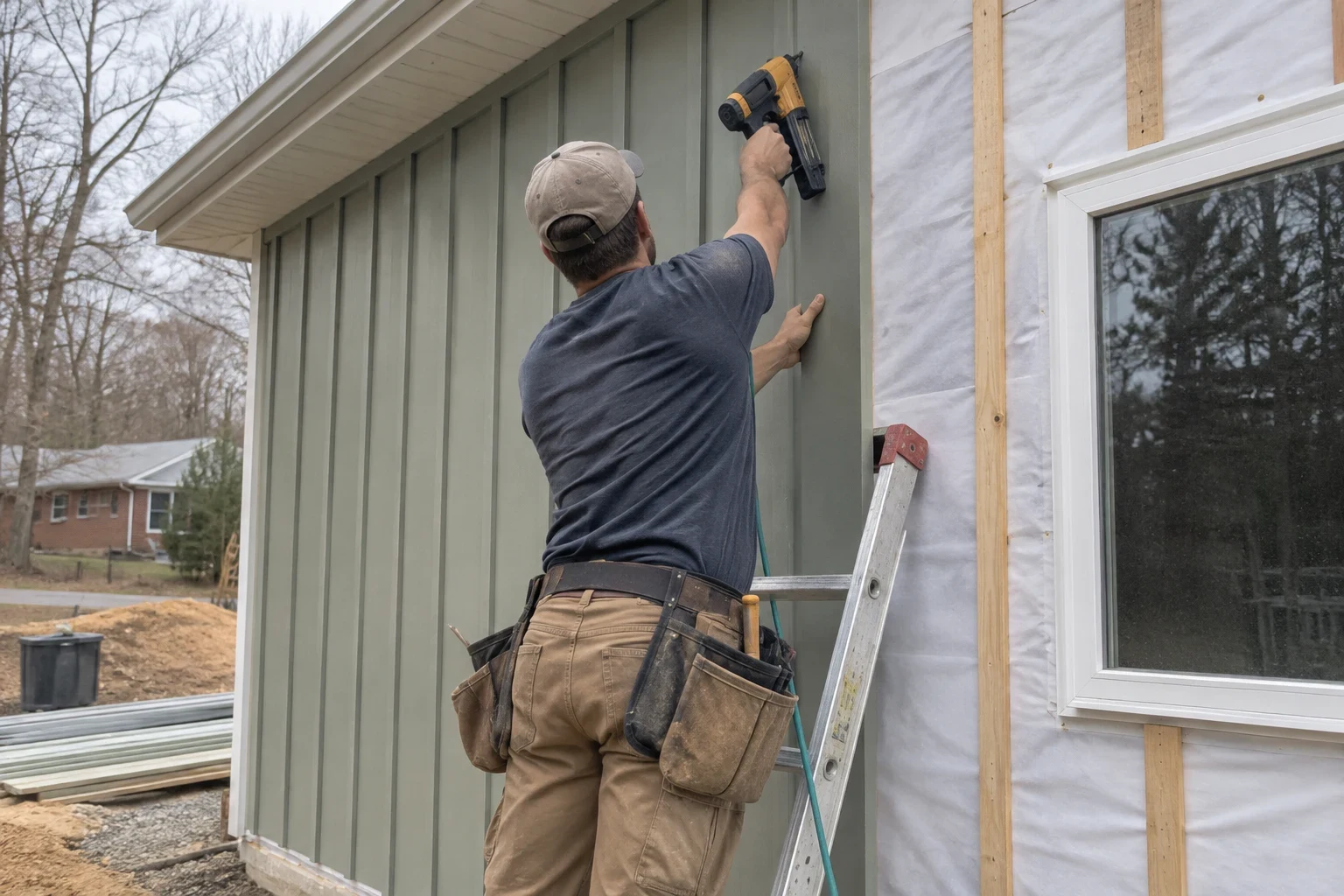
We install fiber cement, vinyl, engineered wood and cedar siding, and we fix damaged sections when that is the sensible choice. First we check the sheathing, house wrap and flashing behind it, so you know whether a patch will hold or the wall needs new siding.
What we look at first on a siding job
Siding is the visible layer of a wall system. Behind it sit the water-resistive barrier, the flashing at windows, doors and roof lines, and the sheathing nailed to the framing. Most siding problems start when water gets past one of those layers, not because the boards themselves wore out.
That is why we often recommend repair first. If a few courses are cracked from a mower strike, or one wall has rot under a missing kick-out flashing, we fix that wall and match the rest. When the sheathing is soft across several walls, or the original product is failing everywhere at once, new siding on the whole house costs less over time, and we will show you why with photos.
On homes in and around Brevard, heavy rainfall and shaded, damp walls make the details behind the siding matter more. Siding is one of the exterior upgrades we handle alongside home remodeling and new custom home building.
What a siding job with us includes
Wall inspection with a moisture meter
We probe the sheathing at window corners, roof-wall intersections and the bottom courses, where water collects. You get photos of what we find.
Sheathing and framing repair
Soft OSB or plywood gets cut back to solid wood and swapped for new panels. If a stud or sill plate is damaged, we fix the framing while the wall is still open.
House wrap and flashing
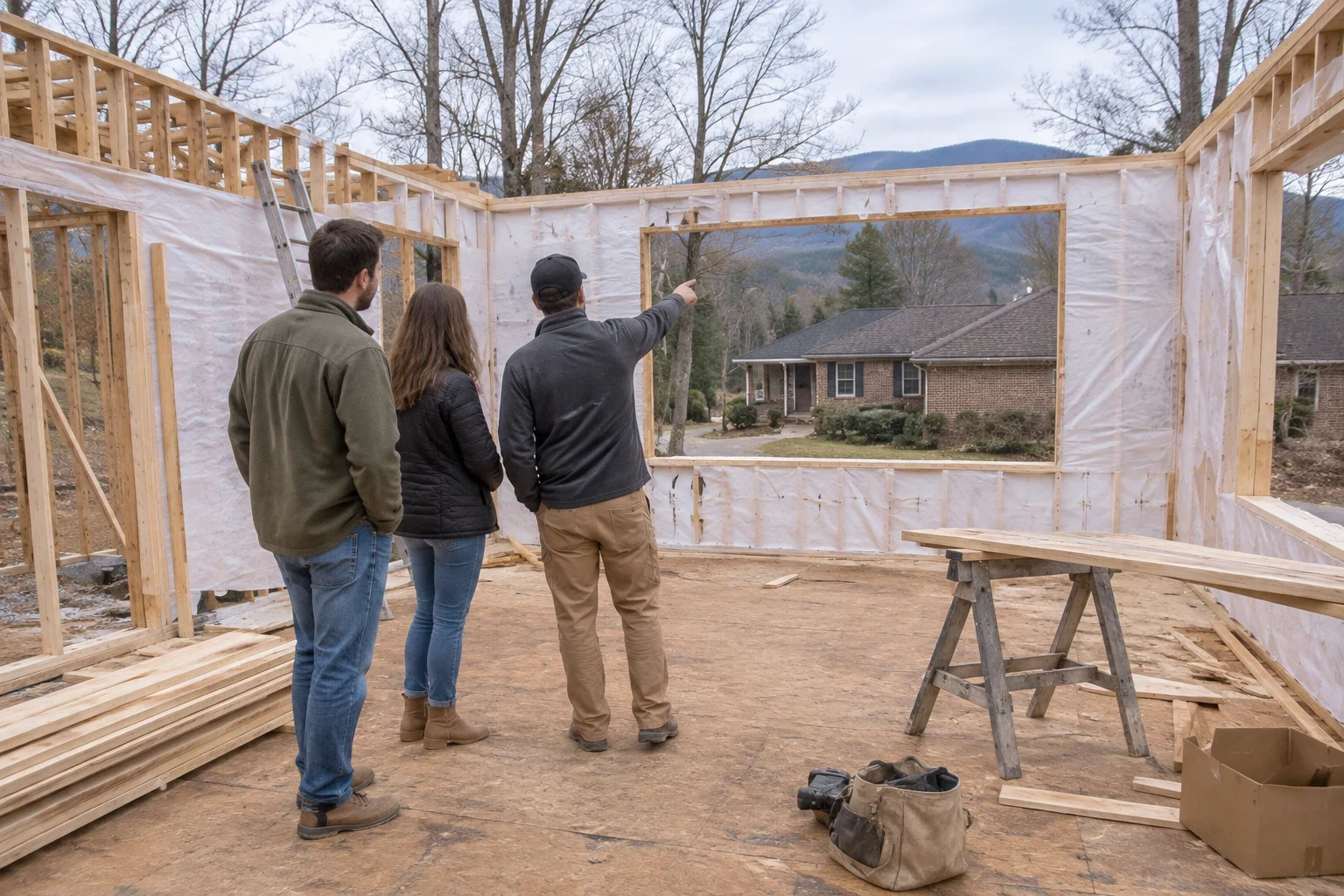
We lap the water-resistive barrier shingle-style and tape the seams. Windows and doors get flashing tape in the right order, and every roof-wall intersection gets a kick-out flashing.
Siding and trim installation
Each material is installed to its own rules: vinyl hung loose on the nail so it can expand, fiber cement with flashed butt joints and proper clearance above grade and roof, cedar and engineered wood with sealed cut ends.
Cleanup
Old siding and wrap are hauled off, and we sweep the yard and driveway with a magnet for nails at the end of each day.
Clues your siding needs a closer look
- Spots that feel soft
- Push on the siding low on a wall or below a window. If it flexes, the sheathing underneath is probably wet or rotting.
- Bottom boards swelling or flaking
- Old hardboard and some engineered siding puff up along the drip edge as cut ends soak up water. After the edges mushroom, paint can't fix it.
- Paint that won't stay on
- When paint fails after a season or two, moisture is usually pushing out from behind the boards. We track down where it comes from before discussing paint.
- Vinyl that is cracked, bent or loose
- Vinyl fastened too tight buckles in summer heat, and aging panels get brittle and split in cold weather. Any gap lets wind-blown rain get to the wrap.
- Streaks under roof edges and windows
- Dark streaks running down from a spot where a roof meets the wall often mean a kick-out flashing is missing, a very common source of hidden rot.
How a siding project runs
- 1
Consultation by phone
You tell us about the house, the material you have and what you are seeing. We set a time to look at the walls in person.
- 2
Inspection and written estimate
We check the siding, wrap, flashing and sheathing, then give you a line-item estimate. It states whether we recommend fixing sections or new siding throughout, and the reason for each choice.
- 3
Tear-off and wall work
We remove siding one elevation at a time so the wall is not left open to weather overnight. Damaged sheathing and framing are replaced, and you see the condition before we close it up.
- 4
Wrap, flash and install
New barrier and flashing go on first, then trim, then siding. If your job needs a permit, we pull it and schedule the inspection.
- 5
Walkthrough and cleanup
We walk the house with you, check caulk joints and trim, and leave the site clean.
What moves the price of siding
Siding cost depends less on the boards than on what the wall needs underneath them. We cannot price the hidden part until we have opened a test area, so our estimate lists the known work separately from the allowance for sheathing repair.
- Material choice
- Vinyl is the lightest and quickest to hang. Fiber cement and cedar take more labor, cutting and finishing, and fiber cement needs dust control when cut.
- Condition of the sheathing
- Sound sheathing means we go straight to wrap and siding. Rot spread across several walls adds material and labor that no one can see from the driveway.
- Wall height and access
- Two-story walls, steep lots and tight side yards need staging or lifts, which adds setup time.
- Trim and openings
- Every window, door, corner and roof-wall intersection needs flashing and trim. A house with many openings costs more per square foot than a plain wall.
- Section fix versus full re-side
- A smaller job costs less, but matching an older color or profile can take sourcing time. We tell you when a match is realistic and when it is not.
Common questions about siding
- Can you fix only the damaged section rather than the whole house?
- In many cases, yes. When damage stays on one wall or a few courses and the remaining siding is in good shape, we repair that section and flash whatever caused it. When the siding is failing on every side or the color can't be matched, we explain why replacing all of it is the better choice.
- Is it okay to put new siding over the old?
- We seldom advise it. Siding over siding conceals rot in the sheathing and makes proper window flashing difficult. Removing the old layer lets us see the wall and repair what's underneath.
- What siding lasts longest on a damp, shady lot?
- Fiber cement and vinyl both hold up against rot, and fiber cement is less prone to sagging or warping in the heat. Cedar and engineered wood perform well as long as the ends are sealed and the lowest course sits high enough above the soil. With any material, a rainscreen gap behind the boards lets a damp wall dry out.
- What credentials cover your exterior work?
- We hold licensing and insurance in NC and SC. If you want to know how coverage applies to your project, we can go over it on the phone.
- Is your siding work guaranteed?
- Yes, our workmanship carries a 1-year warranty. If an installation detail we did fails during that year, we return and fix it.
- How much time does a siding job need?
- That depends on the house size, the siding you pick and how much sheathing has to be repaired. Your estimate comes with a working schedule, and we revise it after the first wall is opened up.
Find out what your walls need
Tell us what you are seeing on the outside of your home. We will set up a visit, check behind the siding and give you a straight answer on repair or replacement.