ServicesLand Clearing
Land Clearing in Brevard, NC
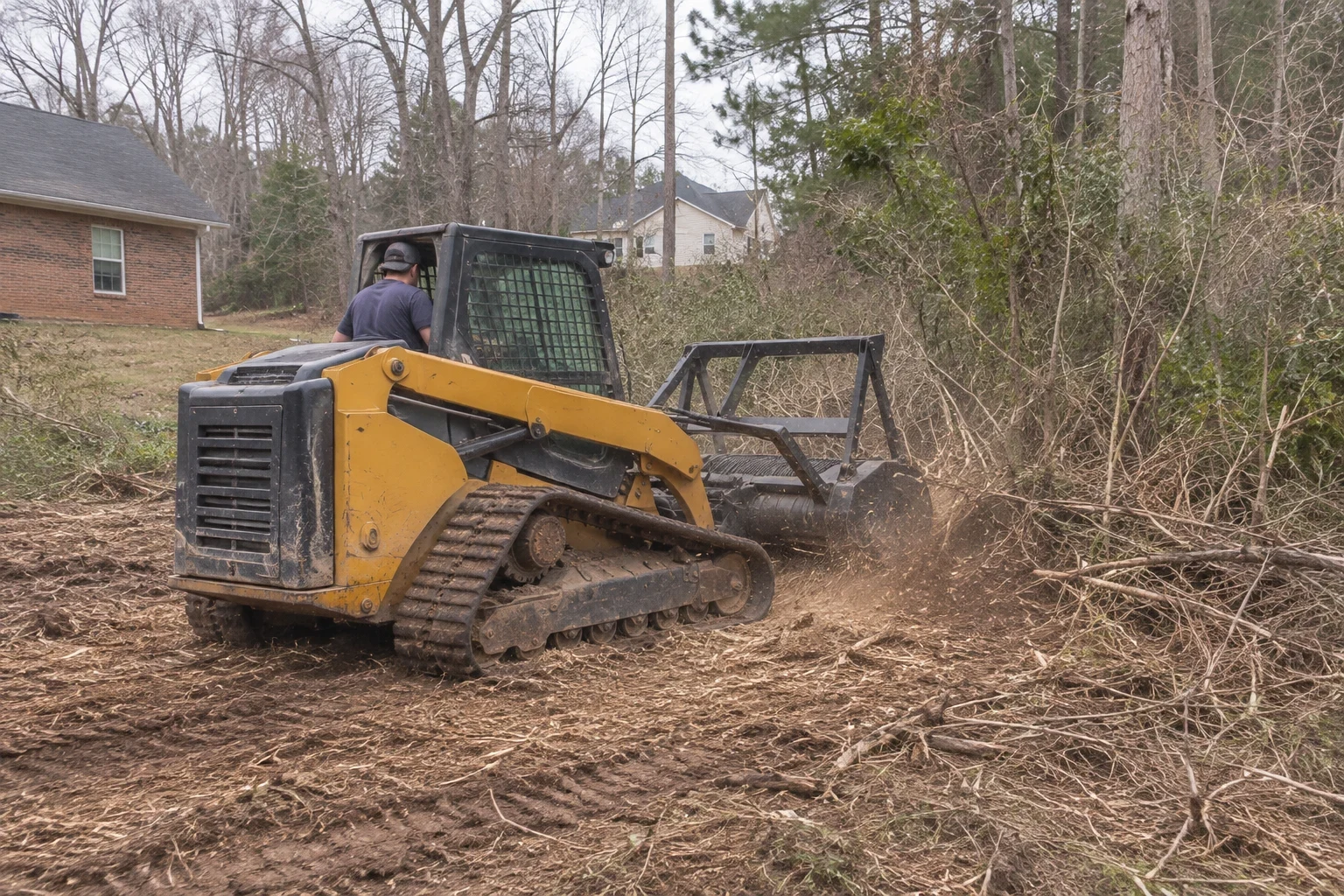
We clear building lots for the house, driveway and septic field, and we leave standing the healthy trees that shade and anchor your site. Inside the footprint, stumps and roots come out completely so grading and foundation work start on clean, firm soil.
Clearing only what the build needs
Land clearing is the first physical step of a build. It means taking trees, brush, stumps and root mass off the house pad, the driveway path, the septic area and a working margin around them so equipment can move and the soil can be graded and inspected.
Our approach starts with what to keep. A sound white oak or tulip poplar outside the footprint shades the house, holds the slope and costs nothing to keep, so we flag it and fence off its root zone instead of taking it because the machine is already there. When a tree sits too close, leans toward the house site or is already declining, we explain why removing it now costs less than removing it after the roof is framed.
Buried wood rots, and rotting wood settles. That is why we extract stumps and lateral roots from anywhere a footing, slab or driveway will go. We are licensed and insured in NC and SC, which matters on a job where heavy equipment works near property lines, neighbors' trees and overhead service drops.
What a clearing job includes
Site walk and tree marking
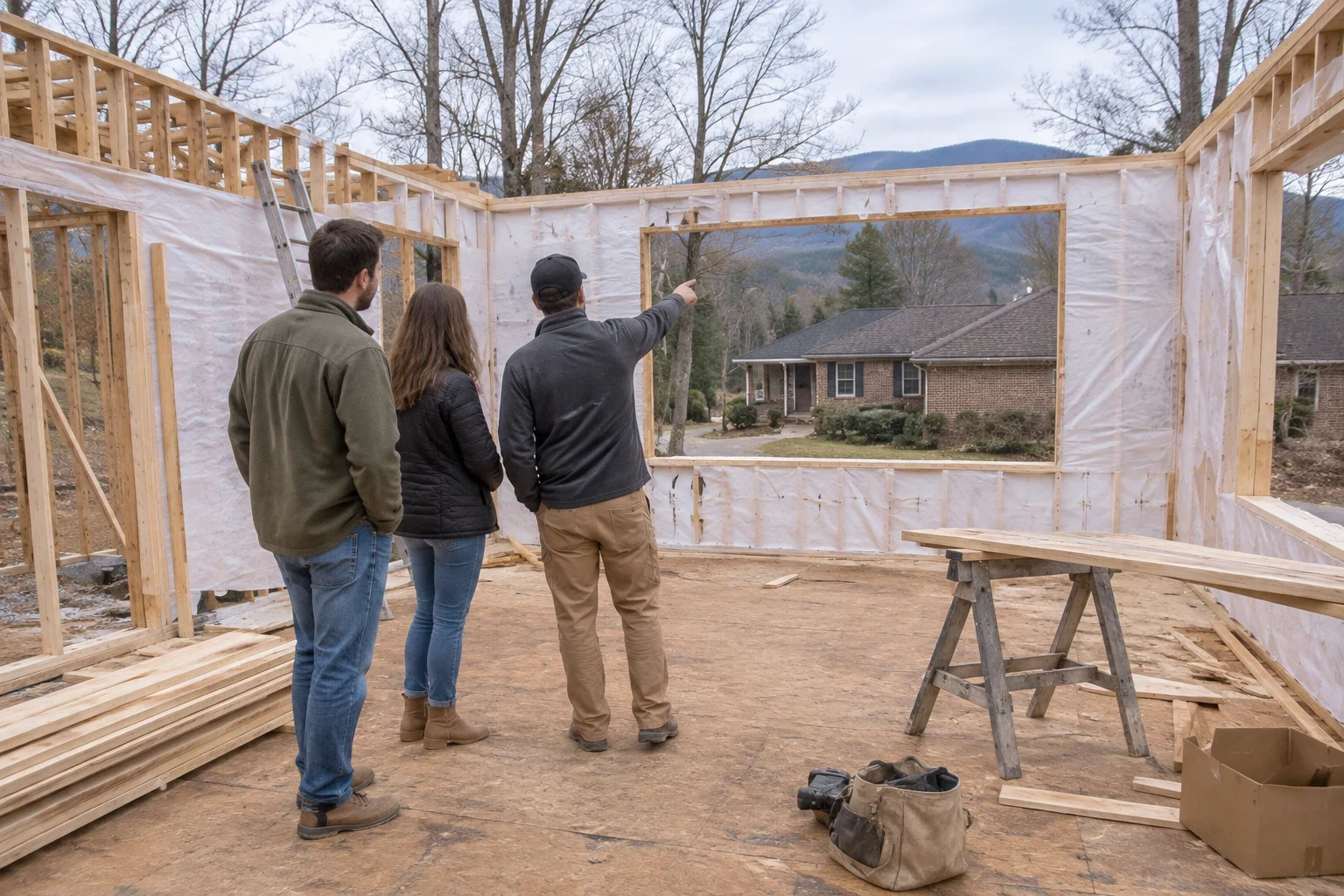
We stake the house corners, driveway and septic area against your floor plan, then mark each tree as remove or keep. You see the plan on the ground before any saw starts.
Selective tree removal
Trees are felled away from keepers and structures, limbed and cut to length. Large trees near lines or buildings are taken down in sections.
Stump and root extraction
Inside the footprint and under the driveway we dig stumps out with the root ball rather than grinding them flush. Grinding leaves roots in the ground that decay into soft spots under concrete.
Brush and wood handling
Brush can be chipped and spread as mulch on slopes outside the build area, and usable logs can be stacked for firewood or hauled off. We go over the options with you during the site walk.
Erosion control
Silt fence goes in on the downhill side before soil is exposed, and a gravel construction entrance keeps mud off the road. Bare areas outside the pad get seeded or covered so heavy rain does not carry topsoil away.
Signs your lot needs clearing
- You cannot see the house site
- If the spot on your floor plan is buried in laurel or rhododendron thicket, nobody can confirm the slope, rock or drainage until it is opened up.
- Trees lean toward the planned house
- A tree leaning toward the footprint, or with a large limb over it, is a risk to the framing crew and to the finished roof.
- Dead or hollow trees on the lot
- Standing dead pines and hollow hardwoods drop limbs without warning. They are easier and cheaper to remove while nothing is built beneath them.
- Old stumps where the driveway will go
- Previous logging often leaves stumps that will rot and sink under gravel or concrete. They need to come out, roots included.
- Brush has crept toward an addition site
- If you are planning an addition or garage on an existing home, overgrowth near the house holds moisture against the siding and blocks access for equipment.
How a clearing job runs
- 1
Consultation and site walk
We walk the lot with you, compare it to your plans and talk through which trees stay, where equipment can enter and where wood and brush will go.
- 2
Permits and erosion setup
If the disturbed area triggers an erosion and sedimentation control plan, we sort that out first. Silt fence and the construction entrance go in ahead of any cutting.
- 3
Felling and brush removal
Keepers get protective fencing at the drip line. Then we fell, limb and chip, working from the access point inward so the ground we have already cleared is not churned twice.
- 4
Stump extraction and handoff
Stumps and roots come out of the footprint and driveway, holes are backfilled, and the site is left ready for grading and foundation work.
- 5
Cleanup and walkthrough
We walk the finished site with you, confirm the kept trees are intact and point out any rock or wet ground we uncovered.
What moves the cost of land clearing
Clearing is priced on what is actually on the ground, so we give you a number after we have walked the lot. These are the things that make the biggest difference.
- Area and density
- An open meadow with scattered pines clears far faster than an acre of mature hardwoods with a dense laurel understory.
- Slope and access
- Steep ground slows machines and may need tracked equipment. A narrow or soft entrance can mean building a temporary access path first.
- Tree size and proximity
- Large trees near power lines, houses or property lines are taken down in sections, which takes more time and care than open felling.
- Stump removal and disposal
- Full extraction under the footprint costs more than grinding, but it prevents settling. Hauling wood off costs more than chipping it on site.
- Erosion control requirements
- Bigger disturbed areas need more silt fence, more stabilization and sometimes an approved erosion control plan in hand ahead of any work.
Land clearing questions
- Does clearing my land need approval from the state or county?
- The trigger is mostly the size of the disturbed area. North Carolina requires an approved erosion and sedimentation control plan once disturbance reaches one acre, and local ordinances can add rules for smaller sites near streams. We look up what applies to your parcel as part of the consultation.
- Can you save specific trees I care about?
- Yes. We mark keepers on the site walk and fence their root zones so equipment stays off. If a tree is too close to the footprint to survive excavation, we tell you plainly and explain why.
- Why pull stumps instead of grinding them?
- Grinding removes the stump but leaves the roots, which rot over a few years and leave voids. Under a footing, slab or driveway those voids become cracks and dips. Outside the build area, grinding is often fine and costs less.
- Will clearing send mud onto my neighbors?
- Not if erosion control goes in first. Silt fence goes on the downhill side ahead of any exposed soil, and we stabilize bare ground outside the pad as we finish each section.
- Is your work covered after the job is done?
- Yes. Our clearing work carries a 1-year warranty on workmanship. We go over how it applies to stump backfill and erosion measures on your lot during the consultation.

Get your lot ready to build
Tell us about your land and your plans, and we will walk it with you and lay out what should come down and what should stay. From there we can carry the site into grading and foundation work.