ServicesGrading
Grading in Brevard, NC
We shape the ground around new builds and existing homes so water runs away from the foundation, driveways hold their line and yards stop washing out. When a slope can be corrected with soil and compaction, we tell you so before anyone talks about walls or drains.
What Grading Is and When a Lot Needs It
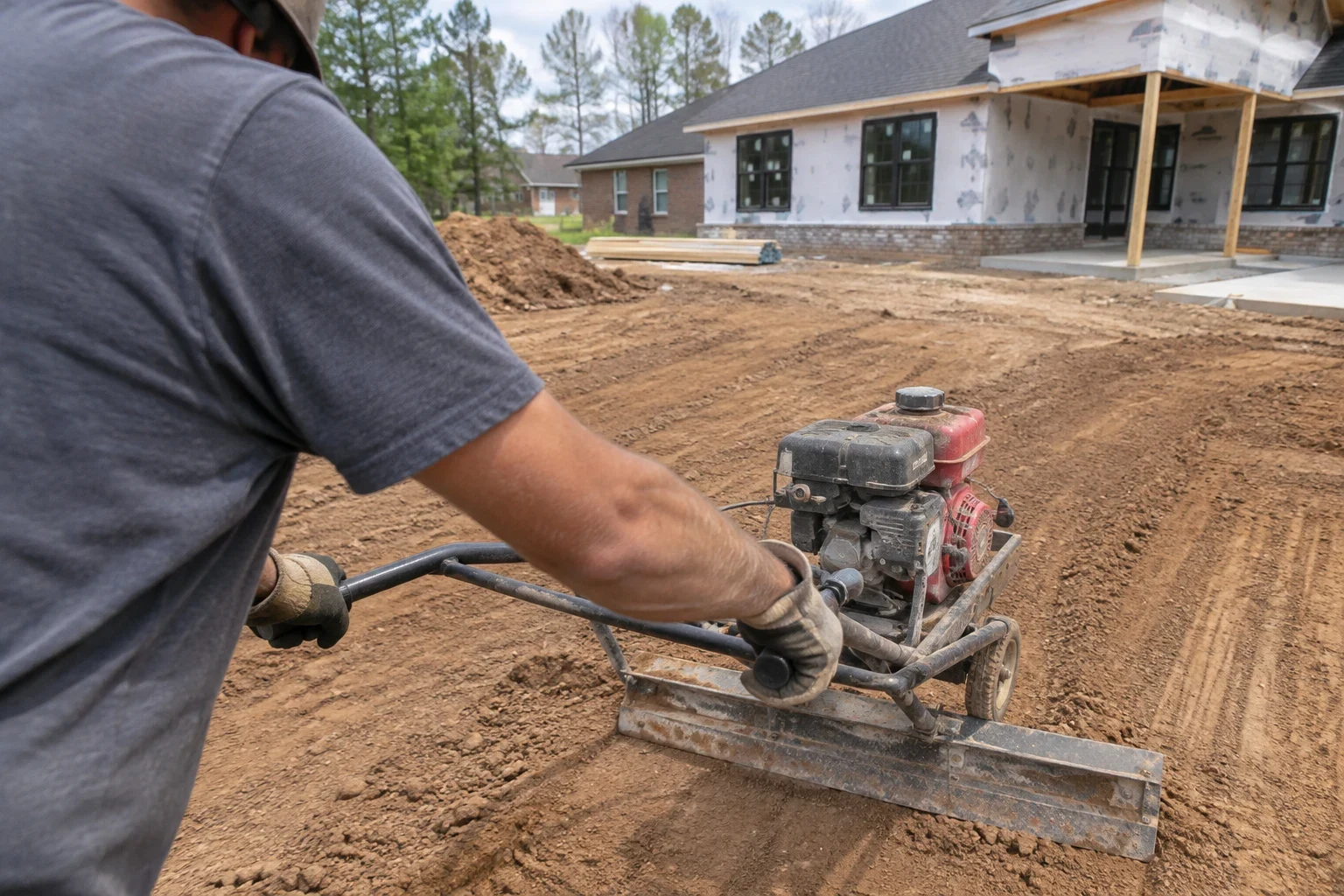
Grading means cutting, filling and compacting soil to set a lot's elevations. For a new custom home, it produces a flat, stable building pad and a driveway a concrete truck can get up. Around a house that already stands, it creates the slope that sends roof and surface water away from the foundation rather than into it.
Settled fill is behind most drainage problems. Backfill pushed against a foundation wall shrinks during the first few years, and ground that used to slope away ends up leaning back toward the house. The right repair is often rebuilding that slope with compacted, clay-rich soil instead of tearing up the yard for a French drain or retaining wall. We look at that option first and tell you plainly when it will fall short.
We are licensed and insured in NC and SC, and before any soil is moved we secure the land-disturbance and erosion-control approvals the job calls for.
What Our Grading Covers
Building pad prep
We cut and fill to the elevations your site plan calls for, compacting in lifts so the pad holds footings without settling. This step normally comes after land clearing and just ahead of foundation work.
Regrading around a house
At an existing home we remove settled soil, bring in compacted fill and reset the ground to fall away from the walls. We aim for at least six inches of drop across the first ten feet, the usual building code target.
Driveway and access grades
We set the grade and crown of a driveway so rain runs off the sides rather than down the middle, where it carves ruts in gravel.
Swales and drainage paths
Shallow, shaped channels guide water around the house and off the property. A properly built swale often handles runoff people think requires buried pipe.
Keeping soil in place
Silt fence, temporary seed and straw hold bare soil on your property while we work. On hillside mountain lots, this matters as much as the grading.
Finish grade and topsoil
We leave a smooth surface topped with topsoil, ready for seed, sod or plantings.
Clues That Your Lot Needs Grading
Puddles along the foundation
Water that stands beside the walls after rain tells you the ground there is flat or tilts toward the house. Given time, it works into cracks in block or poured walls.
Crawlspace that smells or feels damp
A wet crawlspace is often fed by surface water soaking in around the edge of the house. Fixing the outside grade is usually the first and least costly move.
Washouts and bare roots
Channels carved in the yard mark where concentrated runoff is carrying soil off. Untreated, they get bigger with each heavy storm.
Spots that stay soggy
A lawn area that stays wet usually sits in a dip with nowhere for water to drain. Filling and reshaping it gives the water a way out.
Sunken soil beside the walls
A gap or low strip next to the foundation is backfill that has settled, the most common reason homes a few years old end up with a reversed slope.
The Steps of a Grading Job
- 1
Walk the property and trace the water
During the project consultation we find where water enters, where it pools and how the soil acts. We record downspout positions, current elevations and any settling.
- 2
Suggest the least work that will hold
When reshaping the ground will fix the problem, that is our recommendation. When the slope is too steep or the water too heavy, we explain why a retaining wall or drain is the better answer and what it adds.
- 3
Approvals and erosion control
We get any approvals needed, have utilities marked through NC 811 and set silt fence before digging begins.
- 4
Cut, fill and compaction
Soil is placed in thin lifts and compacted with a plate or roller so it won't sink back into a reversed slope. A laser level checks the grade as we work.
- 5
Finishing and cleanup
We spread topsoil, seed or straw the bare ground, clean equipment tracks off your driveway and walk the final grade with you.
What Sets the Price of Grading
The price of grading comes down to how much soil gets moved, how easy it is to reach and what the ground consists of. Once we have seen the lot, you get an itemized estimate in writing. On mountain land, steepness and rock usually count for more than square footage.
- How much soil is cut and filled
- Keeping cut and fill balanced on the lot holds costs down. Bringing in fill or hauling away extra soil adds trucking and disposal time.
- Steepness and reach
- Steep ground and narrow gaps between houses require smaller equipment and more hand work, so the job runs longer.
- Rock and soil conditions
- Rock near the surface may call for a breaker or a changed grade. Wet clay must dry out or be amended before it compacts properly.
- Approvals and erosion control
- Bigger disturbed areas bring formal erosion-control rules, which add materials and inspection steps.
Grading Questions We Hear Often
Something not covered here? (828) 944-9725
Can regrading fix a wet crawlspace without installing a drainage system?
Often, yes. If the water is coming from surface runoff along the walls, resetting the slope and extending downspouts can stop it. If we find groundwater rising from below or a spring on the hillside, we will tell you that grading alone will not solve it and explain the options.
How long does residential grading take?
Corrective regrading around an existing home is often a one to three day job. A building pad and driveway for a new custom home takes longer and depends heavily on rock, slope and weather.
Do you grade when the ground is wet?
We avoid it. Saturated clay smears instead of compacting, and soil placed that way will settle and undo the slope. After heavy rain we wait for the soil to dry to a workable moisture.
Will the equipment damage my lawn or driveway?
Some disturbance in the work area is unavoidable. We plan access routes, lay mats where needed and repair tracks in the yard when we finish.
Is your grading work covered after you leave?
Yes. Our grading carries a 1-year warranty on workmanship. If compacted fill we placed settles enough to reverse the slope during that year, call us and we will come look at it and set it right.
Get the Water Moving the Right Way
Tell us what you are seeing on your lot, from pooling to a new build site. We will walk the ground, explain the cause and start with the simplest fix that will hold.