ServicesFlooring Installation
Flooring Installation in Brevard, NC
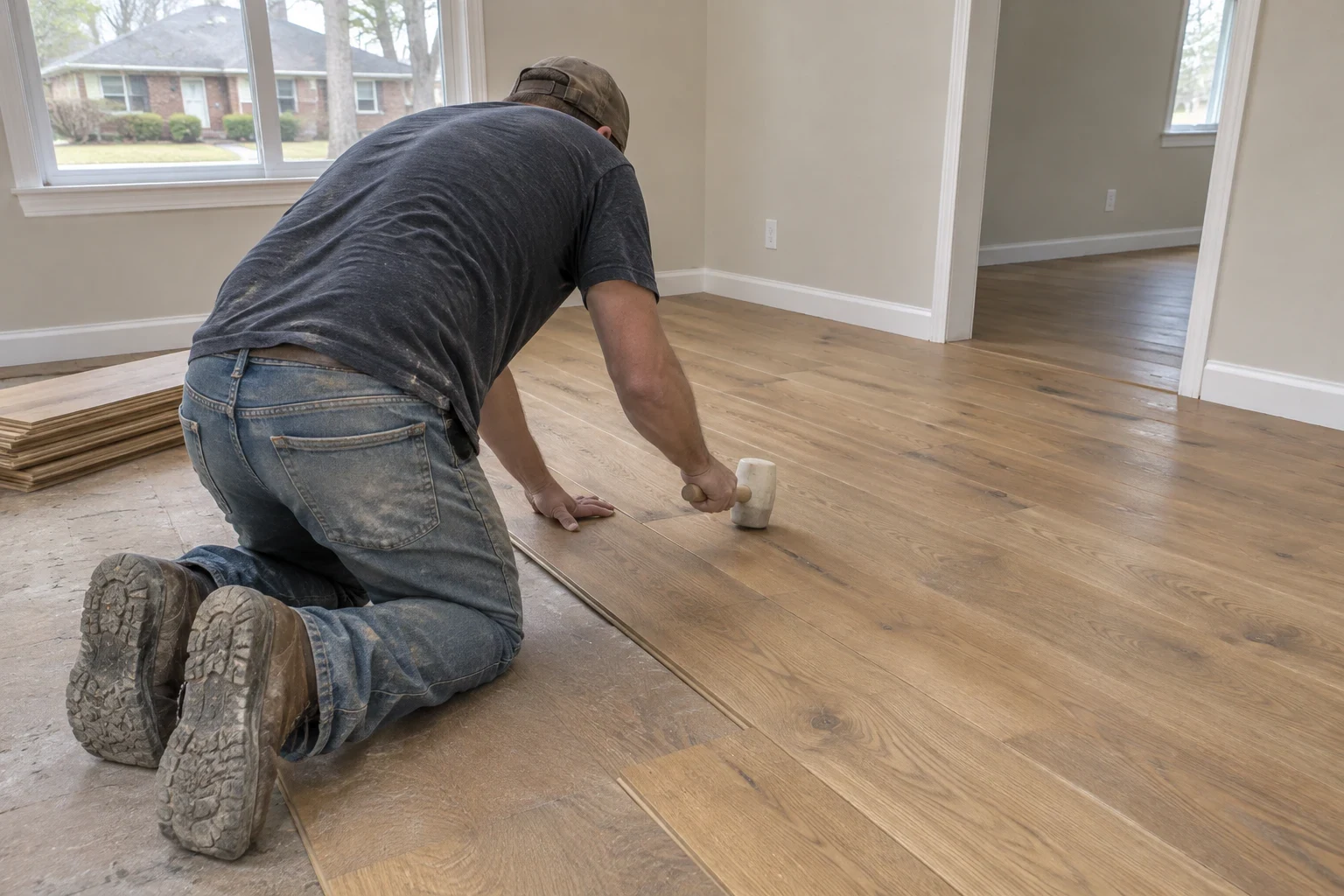
Our crews lay solid and engineered wood, LVP and porcelain or ceramic tile, but the job begins below the surface. We check the subfloor, the joists and the moisture rising from the crawlspace first, so the new floor stays flat, quiet and tight at the seams.
When new flooring is the right call
Most floor problems start below the finish surface. A cupped oak board, a cracked tile or a vinyl plank that keeps clicking apart usually points to moisture, a soft subfloor or joists that deflect under load. Laying new flooring over those conditions only resets the clock, so we find the cause first.
Sometimes the honest answer is repair. Solid hardwood with enough wear layer left can be sanded and refinished, and a handful of damaged boards can be cut out and woven in with matching stock. When the subfloor is delaminating, the hardwood has been sanded down to the tongues, or you want one continuous material through an open floor plan, replacement makes more sense, and we explain why while we are standing on it.
Around Brevard, damp crawlspaces are a frequent reason wood floors cup in late summer, so we meter both the subfloor and the new material at the start of every job.
What our flooring installation covers
- 01
Subfloor and joist check
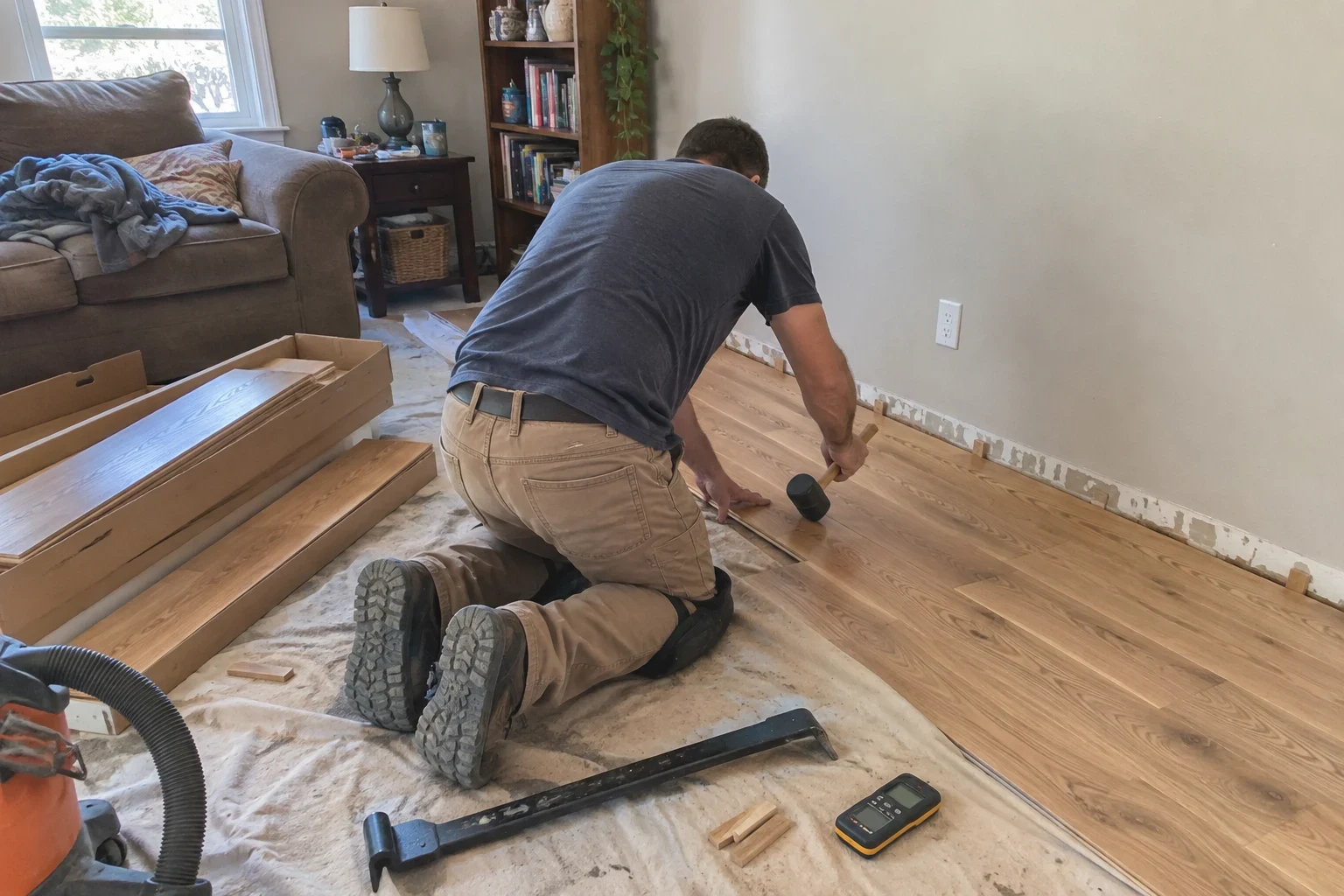
We walk the floor for soft spots and squeaks, look for delaminated plywood or swollen OSB, and inspect joists from the crawlspace or basement where we can reach them. Loose sheathing gets screwed down. Rotted sections get cut out and swapped for new panels on solid blocking.
- 02
Moisture testing
We meter the subfloor and the flooring itself. Wood goes down only when its moisture content is within the manufacturer's range of the subfloor, and concrete slabs are tested ahead of tile or vinyl.
- 03
Leveling and underlayment
Tile and click-lock vinyl need a flat substrate. We grind high spots, fill low ones with leveling compound, and install the underlayment, vapor retarder or cement backer board the product calls for.
- 04
Hardwood and engineered wood
Nail-down solid hardwood and glue- or nail-down engineered planks, acclimated on site, with staggered end joints and the expansion gap at walls the material needs.
- 05
Tile and luxury vinyl plank
LVP for kitchens, baths and basements where water is a risk. Porcelain and ceramic tile set in thinset over backer board or an uncoupling membrane so the tile does not crack when the framing moves.
- 06
Trim, transitions and cleanup
Baseboard and shoe molding reset, thresholds and transition strips fitted, and doors trimmed where the new floor sits higher. Old flooring and offcuts are hauled away.
Questions about Flooring Installation?
Call(828) 944-9725Signs your floor needs attention
Cupping or crowning boards
Board edges higher than the centers mean moisture is coming from below. We fix the moisture source first, then decide whether a refinish will flatten the floor or whether new boards are needed.
Soft or bouncy spots
A floor that gives near a tub, toilet or exterior door often has water-damaged subfloor. That has to be repaired first, or any new finish on top will fail over it.
Cracks running across tiles
A crack that crosses several tiles in a line usually means subfloor deflection or a missing uncoupling layer, not a bad tile. Swapping out only the cracked tile will not stop it.
Gaps that never close
Small seasonal gaps in solid hardwood are normal. Wide gaps that stay open through summer often mean the wood was installed too wet and shrank.
Worn traffic paths
Gray, dull lanes through a hardwood floor usually call for sanding and refinishing rather than new boards, as long as enough wear layer remains.
Planks pulling apart
Click-lock floors that separate at the ends are often laid over an uneven subfloor or pinned under trim with no room to expand.
How a flooring job runs
- 1
Consultation and inspection
On the phone we talk through the rooms, the material you are considering and what is wrong now. At the house we check the subfloor, take moisture readings, measure, and tell you whether repair or replacement fits.
- 2
Written scope and material delivery
You get a line-item estimate that separates subfloor repair, leveling, flooring and trim. Wood flooring is delivered ahead of the install so it can acclimate in the rooms where it will go.
- 3
Prep day
We protect adjoining rooms with plastic and floor covering, pull old flooring and baseboard, and repair or level the subfloor. If we uncover rot or damage we did not expect, we show you before doing extra work.
- 4
Installation
Flooring goes down in the direction and pattern we agreed on, with expansion gaps and transitions done right. Tile is grouted once the thinset has cured.
- 5
Trim, walkthrough and cleanup
We reinstall trim, haul debris away and walk the finished floor with you. Our workmanship on the installation is backed by a 1-year warranty.
What drives the price of a flooring job
Our flooring prices come from what we see at the house, not just the square footage. Two rooms of equal size can end up far apart once the old floor comes up and the subfloor shows. Each part of the work appears as its own line on your estimate, so the costs are easy to follow.
- Flooring type
- Solid hardwood, engineered wood, LVP and tile vary in both material price and labor. Tile is the slowest, since it needs backer board, setting and grout.
- What shape the subfloor is in
- Replacing rotted panels, sistering a weak joist or pouring leveler adds labor and material. No line changes more from one house to the next.
- Tearing out the existing floor
- Carpet lifts out fast. Glued vinyl, tile set in a mortar bed or several layers stacked together take far longer, and older sheet vinyl and its glue may need testing before they come up.
- Room shape and pattern
- Stairs, closets, lots of doorways and layouts like diagonal or herringbone require more cuts and create more waste than a straight run through an open room.
Flooring installation questions
Can you refinish my hardwood instead of replacing it?
Often, yes. We pull a floor vent or check a threshold to see how much wear layer is left above the tongue. If there is enough, sanding and refinishing costs less and keeps the original wood. If it has been sanded too many times, we will tell you.
Can new flooring go right over my old floor?
Sometimes. Click-lock vinyl can go over flat, well-bonded tile or sheet vinyl. The added height can interfere with doors, appliances and stair nosings, though, and covering a soft subfloor hides the problem, so we check before recommending it.
How soon can we walk on the new floor?
Nail-down hardwood and click-lock vinyl can be walked on the same day. Tile needs the grout to cure, usually about a day ahead of light foot traffic. Glue-down floors follow the adhesive maker's cure time, which we give you in writing.
Who stands behind the work if something goes wrong?
We do. We are licensed and insured in NC and SC, and the crew that lays your floor is the same one that comes back if a problem with the installation shows up.
Which wood floor handles mountain humidity best?
Engineered wood is more stable than solid hardwood because its cross-layered core resists swelling and shrinking. Solid hardwood still works well when the crawlspace is dry and the boards are acclimated properly. We look at your crawlspace or slab first and then recommend one.
Do you install flooring as part of a bigger project?
Yes. Flooring is often one part of a home remodeling job or a new build through our custom home building service, and we can sequence it after drywall and paint so the finished floor is not damaged.
Talk through your floors before you buy material
Tell us what you are seeing and what you would like underfoot. We will look at the subfloor, give you a straight repair-or-replace answer and put the scope in writing.