Is It Cheaper to Build a Custom Home or Buy One in Brevard?
The sticker price on a listing and the bid on a new build measure different things, so the honest comparison starts with what each number leaves out.
Is it cheaper to build a custom home or buy one?
Buying an existing home usually costs less up front than building a custom home of the same size, because the land, site work and utilities are already paid for. Building can come out ahead when you already own a buildable lot, or when an older house needs so much work that its real price keeps climbing.
Can you build a home cheaper than buying?
Sometimes, but rarely by accident. An existing house sells with its driveway, well or water tap, septic system or sewer line, and power already in place. On a new build, every one of those is a separate line item before the first footing is poured.
The math shifts in a few situations. If your family already owns the land, the biggest cost of buying, the lot itself, drops out of the comparison. If the houses for sale near you are older and need a roof, new windows, rewiring and a rotted sill plate replaced, the purchase price is only the down payment on the real cost. And if nothing on the market fits how you live, a smaller custom home with a tight floor plan can cost less than a bigger house you would have to remodel anyway.
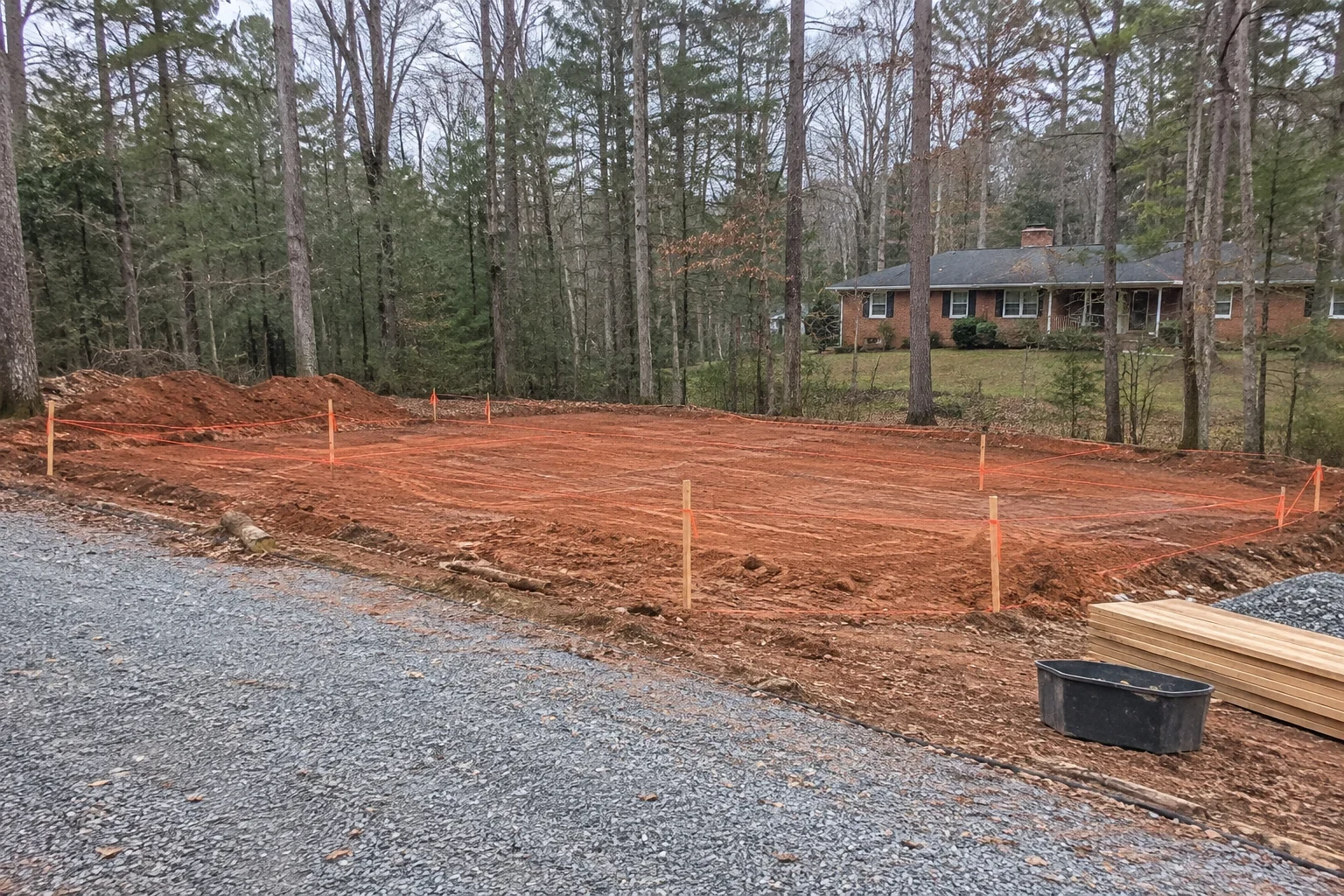
Around Brevard and nearby towns like Etowah and Mills River, many buyers are looking at wooded or sloped land. Those lots can be a good deal on paper, but the site work they need is where a build budget is won or lost.
- You already own a buildable lot with road access
- Existing homes in your price range need major structural or systems work
- You want a smaller, efficient house that the resale market does not offer
- You plan to stay long enough that lower upkeep on new materials matters
What's the most expensive part of building a house?
On a flat suburban lot, the structure itself usually carries the most cost: the foundation, framing lumber, roof system and the mechanical trades. In the mountains, the ground often competes for that title. A lot that looks simple can need land clearing, cut-and-fill grading, retaining walls, rock removal and a long gravel drive before a foundation crew can start.
Here is what tends to move the number most on a custom home.
- Site prep: tree removal, stump grinding, grading for drainage and a driveway that trucks can climb in wet weather
- Foundation type: a crawlspace or full basement on a slope needs taller walls, more concrete and more waterproofing than a slab on level ground
- Framing complexity: rooflines with multiple valleys, vaulted ceilings and large window openings with engineered headers add labor and material
- Utilities: well drilling depth, septic system design based on the county soil evaluation, and the distance to bring in power
- Finishes: cabinets, countertops, flooring and windows can swing the total more than the square footage does
- Permits and inspections: footing, framing, mechanical and final inspections set the pace, and failed ones add time
What is the difference between a spec home and a model home?
A spec home is built by a builder before there is a buyer, on speculation, then sold finished or nearly finished. You get a new house without waiting through the whole build, but the floor plan, materials and finish choices were made for an imagined buyer, not you.
A model home is a show unit, usually in a subdivision, that displays a plan the builder will repeat on other lots. It is often loaded with upgrades, so the price you see on the sign may be for the base plan, not the house you walked through. A custom home differs from both: you pick the lot, the plan and the materials, and the cost follows those choices.
When fixing an existing house beats building or buying
Our habit is to recommend repair when it is sensible, and to say plainly when it is not. If you already own a house that is sound but no longer fits, a remodel or addition often costs less than building new, because the foundation, framing and utility connections are already paid for and inspected.
The signs that a house is worth keeping are structural. A dry crawlspace, a foundation without active cracking or settling, straight floor framing and a roof deck that is not delaminating mean the bones are good. New siding, updated flooring and a reworked kitchen can then give you most of what a new build would.
Replacement starts to make more sense when the problems stack up underneath. Widespread rot in the rim joists and sill plates, a foundation that has moved enough to rack the framing, or a layout that would need most interior walls moved can push a remodel past the cost of starting over. In those cases, we will tell you so before you spend money finding out the hard way.
How to compare build and buy numbers honestly
Put both options on the same sheet. For a purchase, add the price, the inspection findings and the cost of repairs you would need in the first few years. For a build, add the lot, site work, the construction contract, permit fees, utility hookups and the interest you will carry on a construction loan while the house goes up.
Ask any builder for a written estimate broken out by line item, with allowances for finishes clearly marked. Allowances that look low are the most common reason a build runs over, because the real cabinet or tile choice lands well above the placeholder.
More questions about building versus buying
Something not covered here? (828) 944-9725
Can I build on a steep lot?
Often, yes, but slope changes the foundation design, the driveway grade and the drainage plan. A site visit before you buy land tells you how much grading and foundation work it will need.
How is a construction loan different from a regular mortgage?
A construction loan pays out in stages as work is inspected and completed, and many convert to a standard mortgage once the house is finished. Your lender sets the terms, so talk with them early about how draws are scheduled.
Do I need a soil test before building?
If the lot will use a septic system, the county must evaluate the soil before a system can be permitted. Soil and slope also guide the footing design, so it is worth knowing before you finalize a floor plan.
Does new construction come with a warranty?
We stand behind our work with a 1-year warranty on workmanship. Manufacturer warranties on products like roofing, windows and siding are separate and follow each maker's terms.
Talk through your lot or your house before you decide
A project consultation by phone lets us hear what you own, what you are weighing and what worries you. We can talk through site work, foundation and framing questions, and whether a remodel of what you have might do the job for less than a new build.